

Implementing AI and Copilots in Clinical Operations: An Executive Guide
Overview
This guide is a single reference for implementing an AI assistant or copilot in clinical operations. It defines what a clinical operations copilot does, then walks through the full path: assessing readiness, selecting a solution, integrating it into existing workflows, training staff, and evaluating and governing it over time.
The core process has five steps:
- Defining roles
- Assessing current operations
- Integrating the assistant
- Training staff
- Continuous evaluation
A further section brings together the angles that differ by team (sponsor leadership, CRO teams, development teams, clinical operations, study managers) and by stage (readiness, selection, rollout, governance), so executives can choose the entry point that fits their organization.
Introduction
Introduction
The integration of AI into clinical operations presents both significant opportunities and challenges for healthcare organizations. By enhancing the role of the Clinical Operations Copilot, stakeholders can streamline workflows, reduce errors, and ultimately enhance patient care and outcomes. However, organizations must navigate the complexities of implementing these advanced tools to maximize their benefits effectively.
5 Steps to Enhance Your Clinical Operations Copilot Process
Define the Role of a Clinical Operations Copilot
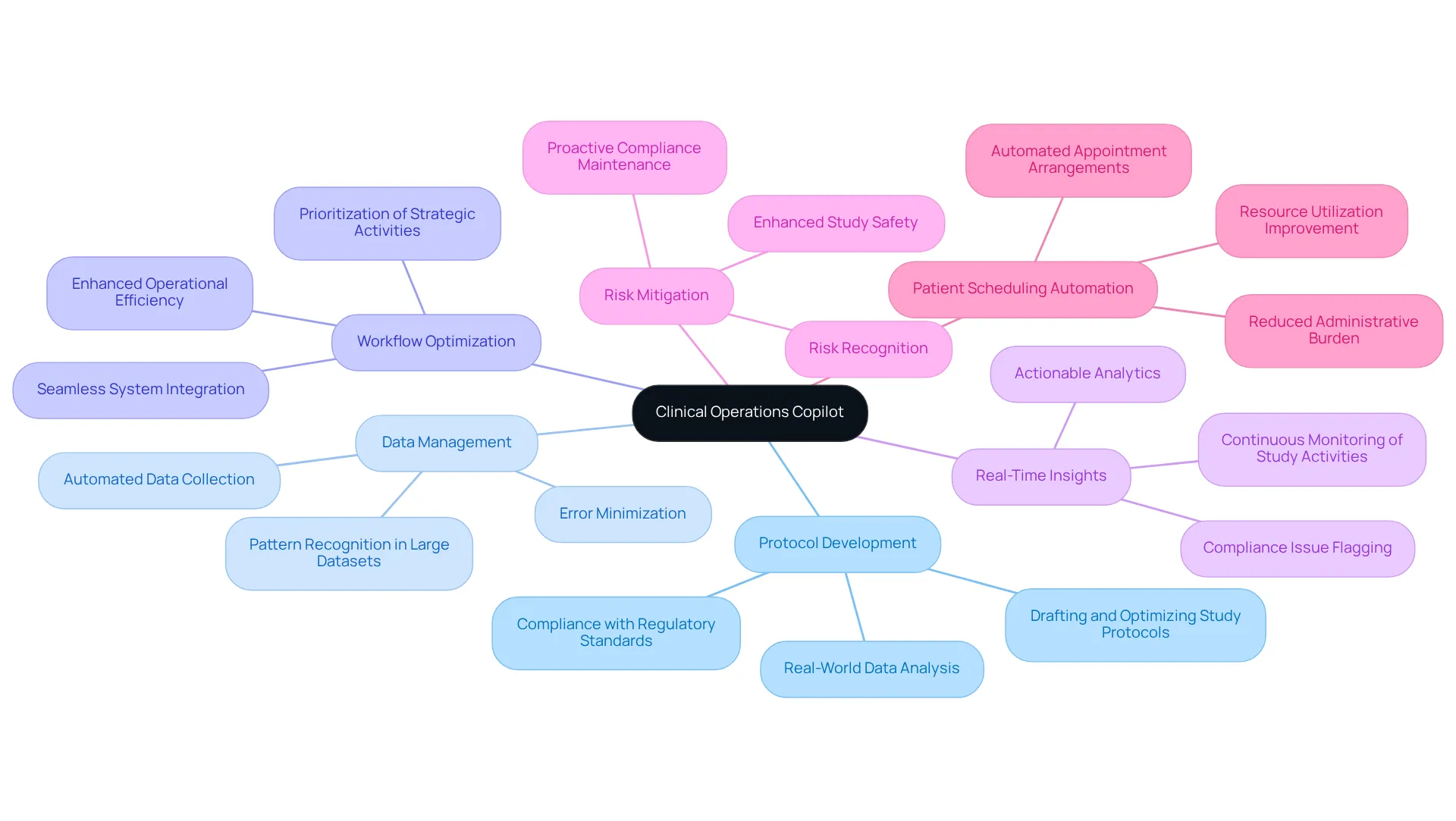
The integration of AI in clinical operations is transforming trial management, particularly through the capabilities of InnovoClinical's Clinical Operations Assistant. Its primary functions include:
- Protocol Development: The Copilot assists in drafting and optimizing study protocols. It analyzes real-world data to ensure relevance and compliance with regulatory standards. This capability is essential, as AI tools can automate the interpretation of medical protocols, significantly accelerating development timelines.
- Data Management: The assistant automates data collection and analysis. This reduces the burden on clinical staff and minimizes errors. InnovoClinical's AI excels at handling large datasets, identifying patterns, and making sense of complex information, which enhances the accuracy of trial data.
- Workflow Optimization: The Copilot enhances operational efficiency. It integrates seamlessly with existing systems, facilitating smoother communication and task management. This shift allows clinical teams to prioritize strategic activities, leading to improved productivity and connected workflows.
- Real-Time Insights: It offers actionable insights and analytics to aid decision-making throughout the testing process. AI-driven systems from InnovoClinical can continuously monitor study activities, flagging potential compliance issues and ensuring adherence to Good Clinical Practice (GCP) standards.
- Risk Mitigation: The assistant can recognize and reduce risks throughout the clinical study process, enhancing overall study safety and integrity. This proactive approach is essential for maintaining compliance and ensuring successful outcomes.
- Patient Scheduling Automation: In multi-center studies, the system automates the arrangement of patient appointments and follow-ups, enhancing clinic resource utilization and decreasing administrative burden.
- StudyCloud Integration: The assistant utilizes StudyCloud's feature to enhance management efficiency, offering a centralized platform for data and communication that streamlines operations and boosts site engagement.
Clearly defining these roles enables stakeholders to understand how to effectively utilize the clinical operations copilot process improvement guide in enhancing healthcare operations. For example, in a recent case analysis, the application of AI in patient scheduling resulted in a 170x speed enhancement in enrollment at Cleveland Clinic, showcasing the concrete advantages of incorporating AI into healthcare workflows. The strategic implementation of AI tools like the Clinical Operations Assistant is not merely advantageous; it is becoming a necessity for achieving optimal outcomes in clinical trials.
Assess Current Clinical Operations for Improvement Opportunities
To successfully integrate a Clinical Operations Assistant, organizations must first conduct a thorough evaluation of their medical operations. This assessment is vital for identifying opportunities for improvement. It also ensures a smooth transition to enhanced workflows. Here are the steps to follow:
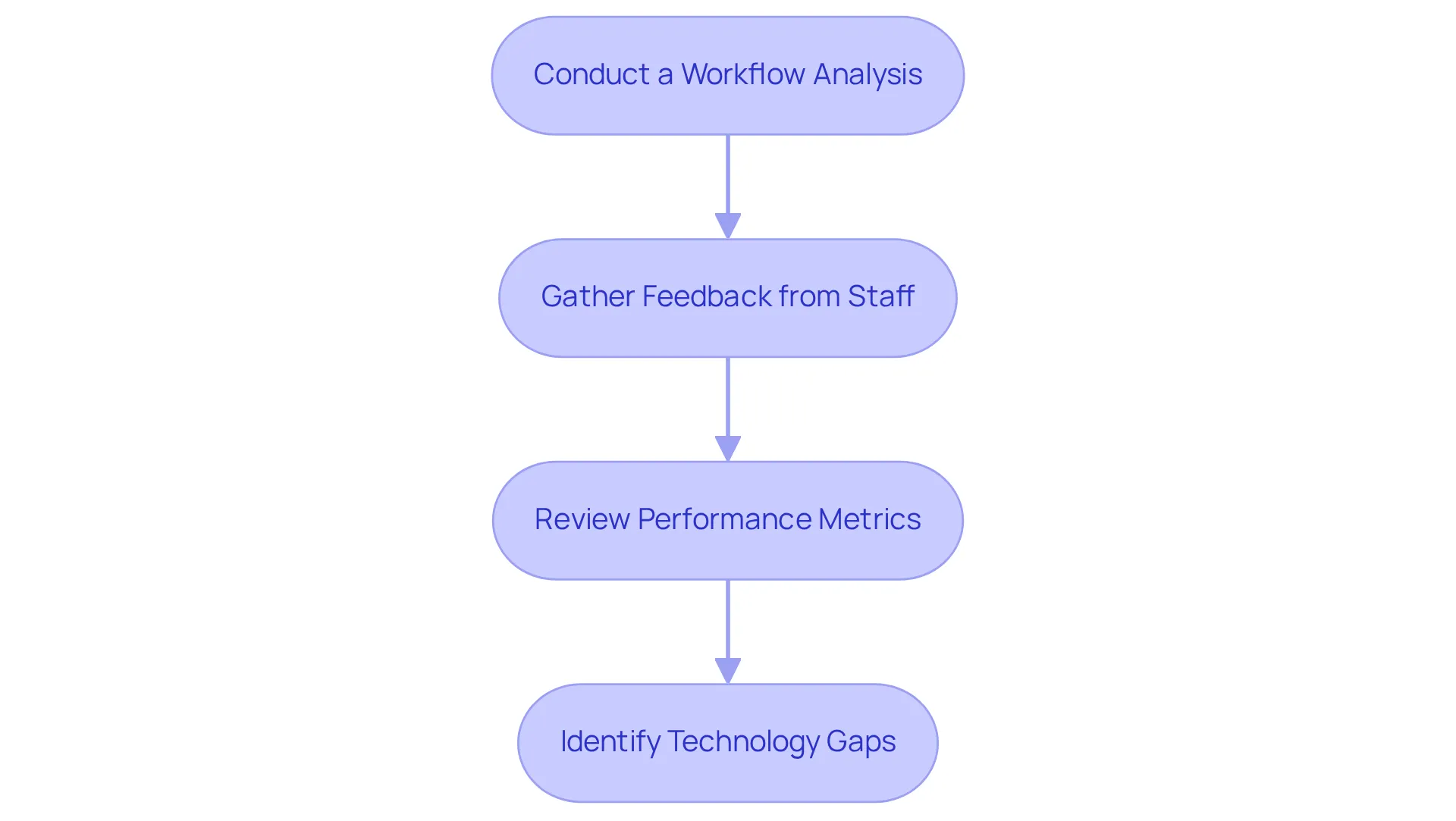
- Conduct a Workflow Analysis: Begin by mapping out existing workflows to pinpoint bottlenecks and redundancies. Utilizing flowcharts or diagrams can help visualize processes, making it easier to identify areas for enhancement. A thorough understanding of healthcare workflows is essential, as each step presents opportunities for enhancing safety and quality of care.
- Gather Feedback from Staff: Engage healthcare staff in discussions about their pain points and challenges. Surveys or focus groups can provide valuable insights into the daily operational hurdles they face. Engaging staff is crucial, as it fosters a supportive environment that enhances problem-solving within healthcare teams.
- Review Performance Metrics: Analyze key performance indicators (KPIs) such as patient recruitment rates, data entry errors, and trial timelines. These metrics are critical for assessing the effectiveness of current operations and identifying specific areas that require improvement. Regular performance reviews can also help gauge the impact of different work arrangements on productivity.
- Identify Technology Gaps: Assess existing technology tools and systems to ascertain if they sufficiently fulfill the requirements of the healthcare team. Understanding the technological landscape is essential, as new tools can streamline processes but may also alter workflows in unexpected ways. Recognizing gaps enables focused incorporation of the assistant to improve operational efficiency.
This strategic assessment not only facilitates the integration of the assistant but also positions the organization for sustained improvements as outlined in the clinical operations copilot process improvement guide.
Integrate the Clinical Operations Copilot into Existing Workflows
Incorporating the Clinical Operations Assistant into existing workflows presents both challenges and opportunities that require meticulous planning. Here are essential steps to facilitate this process:
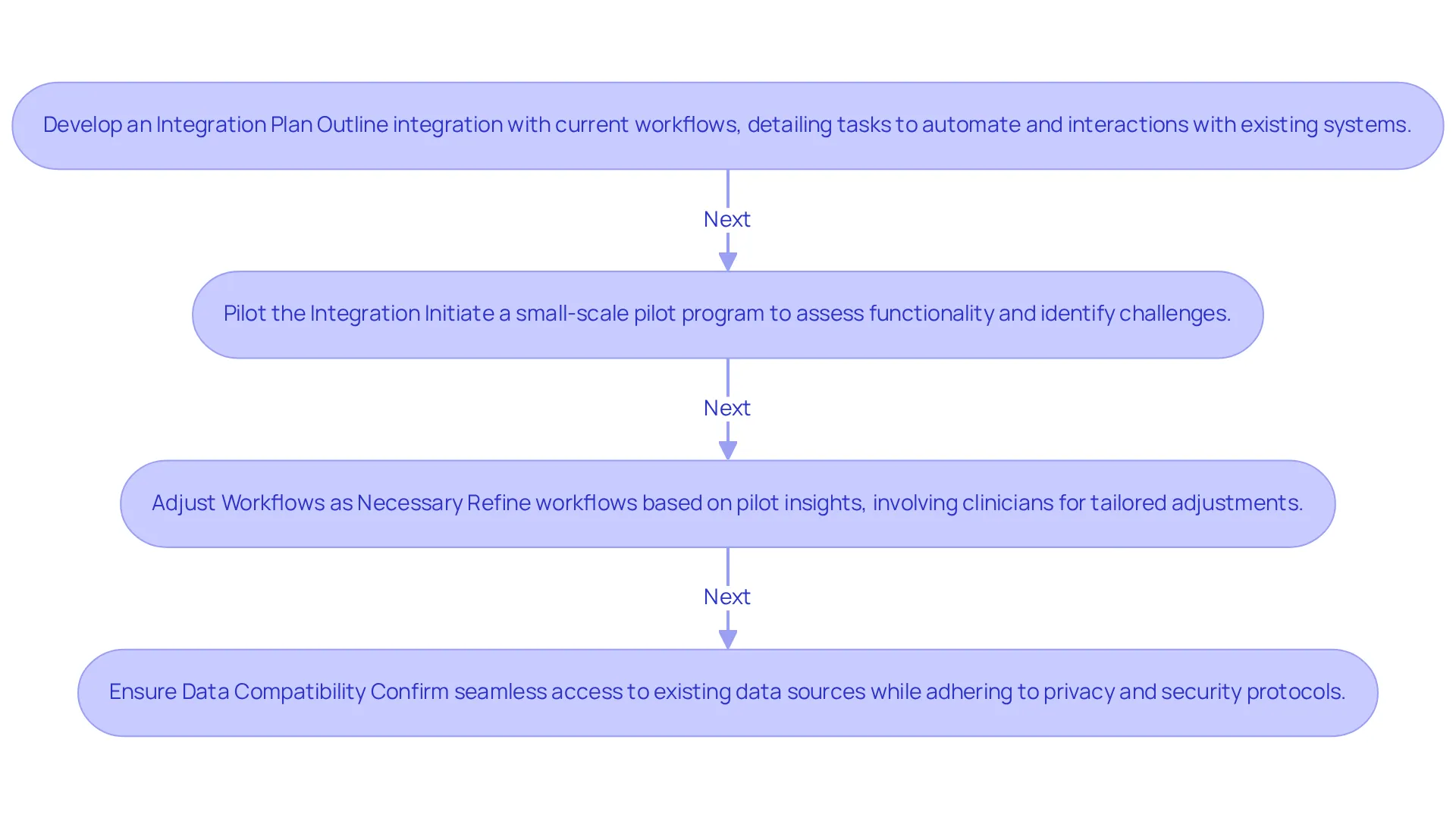
- Develop an Integration Plan: Clearly outline how the assistant will integrate with current workflows, detailing the specific tasks it will automate and its interaction with existing systems. The company's integrated site engagement platform enhances this integration by offering dynamic data visualization for clinical site management.
- Pilot the Integration: Initiate a small-scale pilot program to assess the assistant's functionality in a controlled setting. Identifying potential challenges early on can prevent larger issues later. Using the Learning Management System during the pilot will provide site staff with focused training, preparing them to effectively engage with the new technology.
- Adjust Workflows as Necessary: Utilize insights from the pilot to refine workflows, enhancing the assistant's effectiveness. This may require redefining roles or modifying existing processes to better align with the new technology. Involving clinicians is essential; their insights will help tailor the AI tools to address practical challenges. The solutions consulting from this company can assist in this adjustment, providing seamless integration and agile deployment for optimized clinical trial operations.
- Ensure Data Compatibility: Confirm that the assistant can seamlessly access and utilize existing data sources, enhancing data management without causing disruptions. Ethical considerations should also be taken into account, ensuring that data privacy and security protocols are adhered to throughout the integration process. InnovoClinical's platform is designed to enhance data visibility and management, supporting compliance and regulatory requirements.
Ultimately, a well-executed integration can transform clinical trial management, paving the way for enhanced operational efficiency.
Train and Engage Staff for Successful Adoption
To achieve successful adoption of the Clinical Operations Assistant, organizations must focus on strategic training and user engagement. Here are key steps to consider:
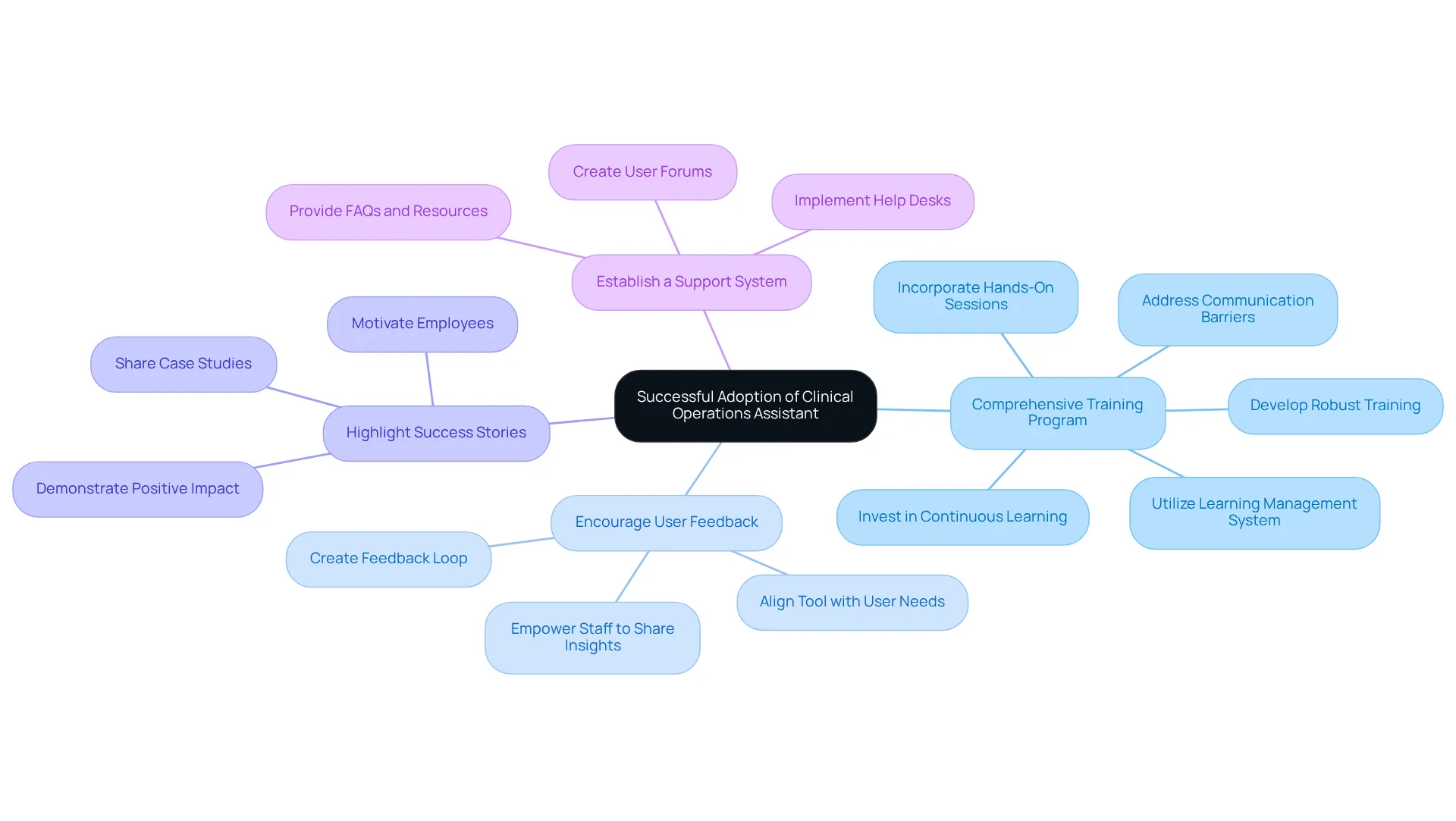
- Create a Comprehensive Training Program: Develop a robust training program that encompasses the tool's features, benefits, and best practices for effective use. Incorporate hands-on sessions and provide resources for ongoing learning to enhance user proficiency. The Learning Management System can facilitate this by providing role-based and task-oriented training, ensuring that staff are well-prepared to use the assistant effectively. Limited visibility and ineffective communication can hinder the adoption of new tools, which this training addresses. According to a recent Parexel study, organizations that invest in comprehensive training programs see a significant improvement in staff performance and retention.
- Encourage User Feedback: Cultivate an environment where staff feel empowered to share feedback on the assistant's functionality. This feedback loop is essential for making continuous improvements and ensuring the tool meets user needs. The WCG CenterWatch survey highlights that organizations that actively seek user feedback can improve the quality and efficiency of their research studies, aligning with the commitment to maximizing study effectiveness through AI-driven solutions.
- Highlight Success Stories: Share impactful success stories and case studies from pilot programs to illustrate the Copilot's positive influence on clinical operations. For instance, Advarra's Clinical Research Conduct Training has demonstrated that effective training can reduce the time required for compliance and improve overall study efficiency. These success stories can motivate employees to embrace the new tool fully, demonstrating how the company's solutions have resulted in significant enhancements in management of tests.
- Establish a Support System: Implement a comprehensive support system for users, including access to help desks, FAQs, and user forums. This allows staff to ask questions and share experiences, fostering a collaborative learning environment. Research indicates that organizations with robust support systems experience higher user satisfaction and engagement, which is crucial for the successful implementation of InnovoClinical's platform capabilities.
By investing in training and engagement, organizations can significantly enhance user confidence and ensure the assistant is utilized to its full potential, ultimately driving efficiency and innovation as outlined in the clinical operations copilot process improvement guide for clinical trial management. Ultimately, a well-structured training and engagement strategy can transform clinical trial management, fostering a culture of innovation and efficiency.
Implementation by Team and by Stage
Organizations reach AI implementation from different starting points. The angles below show what changes by team and by stage.
By team.
- Sponsor and executive leadership: align AI initiatives with organizational goals, secure leadership buy-in, plan change management, and set governance and data-quality expectations before tool selection.
- CRO teams: map workflows, run a pilot, collect feedback and then roll out fully, paying attention to coordinator workload, staff adoption and data privacy.
- Development and protocol teams: assess current protocols, choose tools that support collaborative drafting with version control and compliance checks, and agree governance policies and security training.
- Clinical operations teams: assess workflows, select tools, integrate them with IT, train through workshops, tutorials and coaching, and monitor KPIs with feedback loops.
- Study managers: understand the AI's role, evaluate processes, select tools, pilot the integration, train by role and keep monitoring performance.
- IT and data leads: confirm infrastructure readiness and data quality, integrate with existing systems, and set monitoring frameworks for ethical use.
By stage.
- Readiness: assess infrastructure, culture, skills, leadership support and the regulatory context, using a maturity model to identify gaps and prioritize investment.
- Selection: set objectives, compare tools on functionality, integration, ease of use and compliance, use vendor demos, and weigh cost and return.
- Rollout: follow a phased roadmap from pilot to expansion, with a four- or five-phase plan covering preparation, deployment, configuration and evaluation.
- Technology and automation: understand the underlying technologies (machine learning, natural language processing, predictive analytics) and where they help with recruitment, dropout prediction, protocol work and monitoring.
- Governance: build in transparency, accountability, privacy and bias checks, explainability, human verification of AI output, audits and incident reporting.
- Improvement: track KPIs, review regularly, use feedback loops and update playbooks on a set cadence.
Evaluate and Optimize the Copilot System Continuously
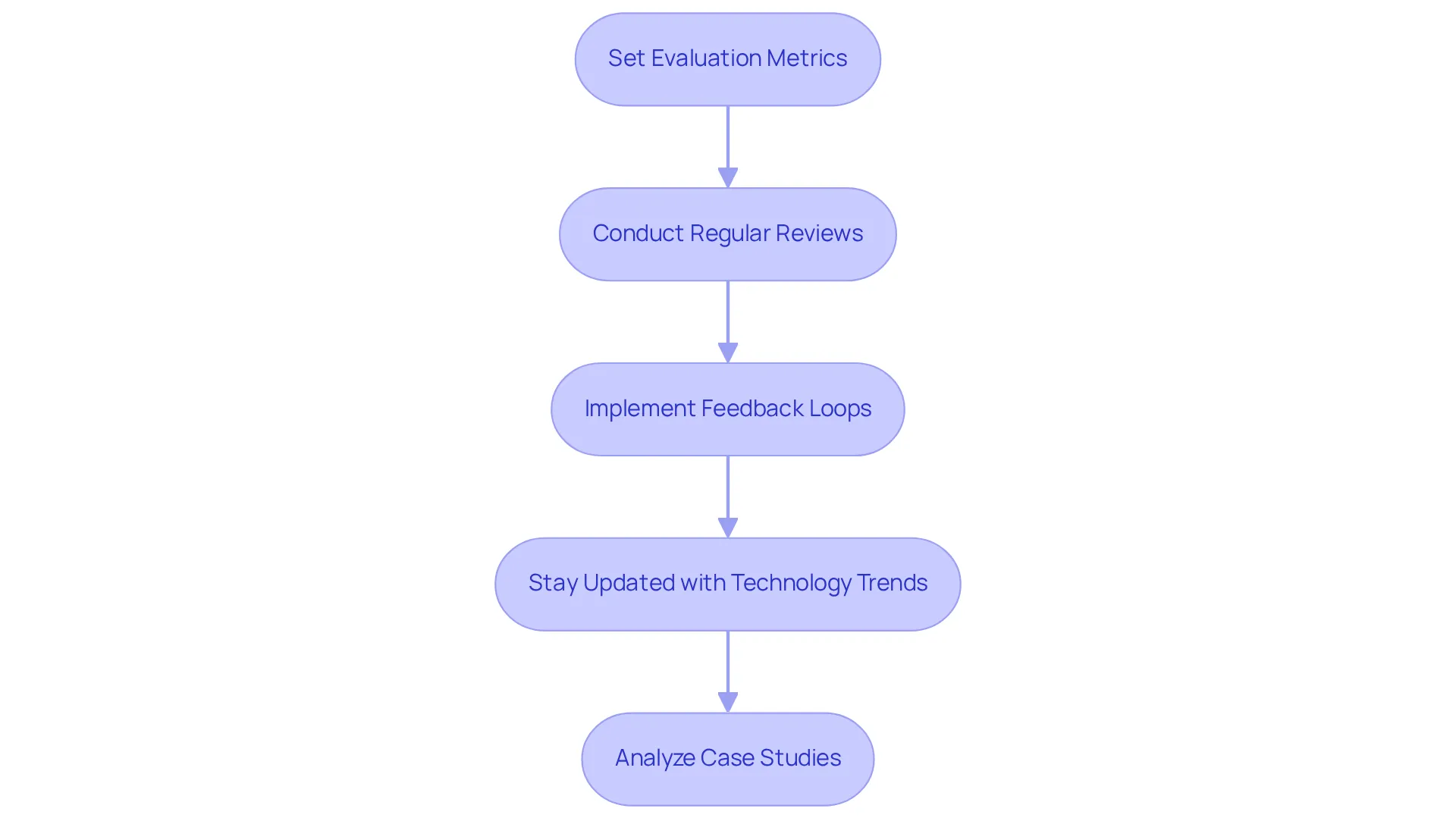
To maintain the effectiveness of the Clinical Operations Assistant, organizations must engage in ongoing evaluation and optimization. Here are five essential steps to enhance its performance:
- Set Evaluation Metrics: Establish specific metrics to measure the assistant's effectiveness, including time savings, error reduction rates, and user satisfaction levels. These metrics will offer a clear framework for evaluating its effect on healthcare operations.
- Conduct Regular Reviews: Schedule periodic assessments to evaluate the assistant's impact on healthcare workflows. Engage key stakeholders, such as development teams and data managers, to gather diverse insights and promote collaborative discussions.
- Implement Feedback Loops: Create structured feedback mechanisms that allow users to report challenges or propose enhancements. This user-driven method guarantees that the assistant develops according to real-world experiences and requirements, resulting in more effective updates.
- Stay Updated with Technology Trends: Regularly monitor advancements in AI and healthcare operations technologies. This vigilance will help sustain the assistant's relevance and effectiveness, ensuring it utilizes the latest innovations to enhance management of experiments.
- Analyze Case Studies: Review successful implementations of AI tools in healthcare operations to identify best practices and lessons learned. For instance, organizations that utilized AI for patient recruitment reported significant reductions in enrollment delays, demonstrating the potential of targeted strategies.
This commitment to these steps will enhance the clinical operations copilot process improvement guide's performance, resulting in improved clinical trial management and operational efficiencies.
Conclusion
Conclusion
The integration of a Clinical Operations Copilot addresses critical inefficiencies in clinical trials, ensuring organizations can enhance both effectiveness and patient outcomes. Leveraging AI capabilities allows organizations to streamline processes and reduce errors, leading to improved patient outcomes. This guide provides a structured approach for implementing and optimizing the Clinical Operations Assistant. It ensures healthcare teams can effectively harness its potential.
Key steps include:
- Defining the copilot's role in protocol development, data management, and workflow optimization.
- Assessing current operations to identify opportunities for improvement.
- Integrating the copilot into existing workflows.
- Training staff.
- Continuously evaluating its performance.
Each of these elements is vital for enhancing innovation and efficiency in clinical operations.
The successful adoption of a Clinical Operations Copilot enhances operational efficiency and positions organizations to effectively respond to the evolving demands of healthcare. Ongoing evaluation and optimization enable healthcare teams to stay at the forefront of clinical trial management, leading to improved patient care and outcomes. Adopting these strategies will fundamentally transform the clinical research environment, making it more effective and responsive.
Frequently asked questions
What is a clinical operations copilot?
A clinical operations copilot, such as InnovoClinical's Clinical Operations Assistant, supports protocol development, data management, workflow optimization, real-time insights, risk mitigation and patient scheduling, and works with StudyCloud for centralized data and communication.
What are the main steps to implement a clinical trial AI assistant?
Define the assistant's role, assess current operations, integrate it into existing workflows through a pilot, train and engage staff, and evaluate and optimize it continuously.
How should an organization assess readiness for clinical operations AI?
Review infrastructure, data quality, culture, skills, leadership support and the regulatory context. A workflow analysis, staff feedback, KPI review and a technology-gap check show where to start, and a maturity model helps prioritize gaps.
How do you choose an AI solution for clinical trials?
Set clear objectives, then compare options on functionality, integration with existing systems, ease of use, compliance, support and cost. Vendor demos and a pilot help confirm fit before wider rollout.
Why run a pilot before full rollout?
A small pilot tests the tool in a controlled setting, exposes integration and data issues early, and gives teams evidence to refine workflows before expanding.
How does implementation differ for sponsors, CROs and study managers?
Sponsor leaders focus on goals, governance and change management. CRO teams focus on workflow mapping, coordinator workload and adoption. Study managers focus on process evaluation, role-based training and performance monitoring. Development teams focus on protocol drafting, version control and compliance checks.
How should staff be trained to use a clinical AI assistant?
Use a role-based program with hands-on workshops, tutorials and coaching, supported by a help desk, FAQs and a feedback channel so that users can ask questions and share experience.
What does AI governance for clinical trials involve?
Transparency, accountability, privacy and bias checks, explainability, human verification of AI output, regular audits, incident reporting and oversight metrics.
What are common challenges when adopting clinical operations AI?
Staff resistance, data quality and privacy concerns, integration with IT infrastructure, skill gaps and regulatory compliance. Early stakeholder engagement, training and governance address most of them.
How do you measure the success of a clinical operations copilot?
Set metrics up front, such as time savings, error reduction and user satisfaction, along with operational KPIs like recruitment rates and trial timelines. Review them regularly and feed findings back into the playbook.
What technologies sit behind clinical trial AI and automation?
Machine learning, natural language processing and predictive analytics, applied to areas such as recruitment, dropout prediction, protocol drafting, monitoring and manual data entry.
How does the copilot fit with existing systems?
Plan the integration, confirm data compatibility and security, pilot it, and adjust workflows. The goal is to connect with existing tools rather than disrupt them.